You open your wallet to check a familiar position and find that the number has changed. Perhaps a lending balance grew slightly, a liquidity position became harder to value, or a token swap cost more than the quote suggested. Nothing looks obviously broken. Yet the portfolio you think you own is not necessarily the portfolio the blockchain is currently showing you. In DeFi, tracking assets is not merely an accounting exercise, and protecting a transaction is not merely a matter of choosing a faster gas fee. Both depend on understanding what protocols, contracts, and block-building incentives are doing with your transaction.
That is the overlooked connection: portfolio visibility is backward-looking, while transaction safety is partly forward-looking. A dashboard tells you what has happened. Simulation and MEV-aware execution help you reason about what may happen next. For US users navigating Ethereum and other EVM networks, that distinction matters because a wallet can be the last practical checkpoint before an irreversible interaction with a smart contract.
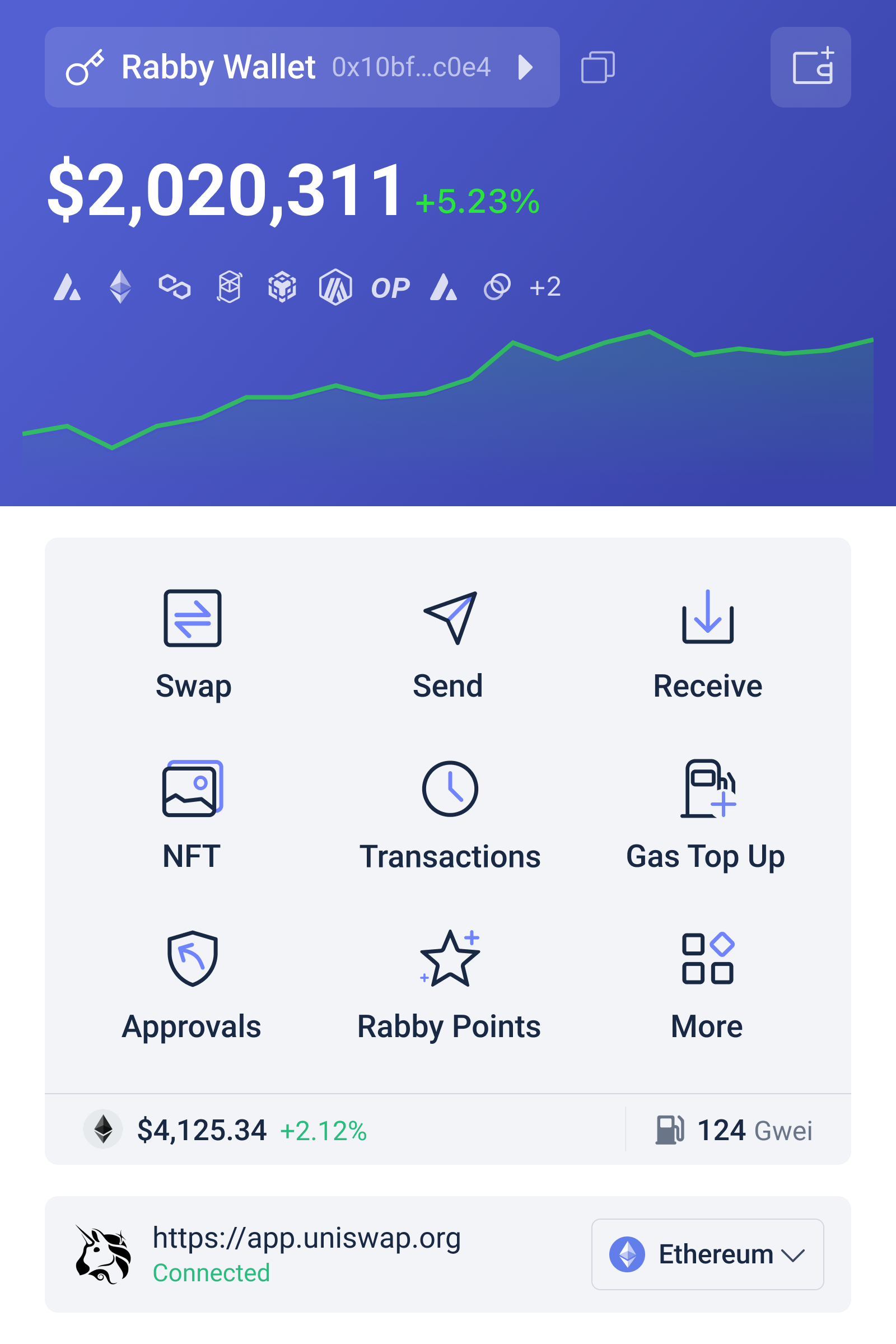
Portfolio tracking is more difficult than adding token balances
A basic portfolio tracker reads wallet addresses and displays token balances. That works reasonably well for a simple collection of fungible assets held directly in one address. DeFi complicates the picture because economic exposure can be distributed across several layers: supplied assets in a lending protocol, borrowed liabilities, liquidity-provider positions, staking derivatives, claimable rewards, and tokens whose value depends on an exchange rate rather than a fixed balance.
The non-obvious issue is that “balance” and “exposure” are different things. A wallet may show a receipt token while the underlying position changes according to a protocol’s accounting system. A liquidity position may contain an evolving mix of two assets rather than a stable dollar allocation. A borrowed position can make a user appear wealthier in gross terms while becoming more fragile as collateral value falls. Portfolio tracking that ignores these relationships can be visually polished and economically misleading.
There is also a timing problem. Market prices update continuously, but protocol state changes when transactions are included. A tracker can therefore show a plausible snapshot that is already stale relative to a pending withdrawal, liquidation risk, reward claim, or rebalance. The practical lesson is simple: use portfolio tools to ask not only “What do I hold?” but also “Which contracts control this exposure, what liabilities sit behind it, and what changes if my next transaction executes?”
DeFi protocols turn ordinary wallet actions into state transitions
In traditional finance, an account interface often hides the machinery behind a trade or transfer. In DeFi, the wallet signs instructions that change shared software state. A swap can alter pool reserves. A deposit can mint a receipt token. A collateral action can change borrowing capacity. A transaction that appears to perform one action may call several contracts in sequence, each with its own assumptions and failure modes.
This is why transaction simulation is more useful than a simple confirmation screen. Simulation attempts to estimate the resulting state before broadcasting: which assets leave the wallet, which assets arrive, whether an approval is being granted, whether a position becomes more exposed, and whether the call is likely to revert. It is not a crystal ball. A simulation can differ from final execution if prices, liquidity, block conditions, oracle values, or contract state change before inclusion. Still, it improves the user’s information at the moment when information is most valuable.
For users evaluating an advanced EVM wallet, Rabby’s positioning around Ethereum and EVM networks is relevant precisely because multi-chain DeFi increases the cost of context switching. A wallet such as https://rabby-wallet.at/ can be useful when portfolio awareness, contract interpretation, and transaction review are brought into the same workflow rather than scattered across unrelated dashboards. That convenience should not be confused with a guarantee of safety, but reducing ambiguity before signing is a meaningful security feature.
MEV protection: what it prevents, and what it cannot
MEV, or maximal extractable value, describes value that block producers, validators, searchers, or other transaction-ordering participants can capture by influencing or reacting to transaction placement. The classic retail example is a large swap visible in the public transaction pool. A trading bot may detect it, submit a competing transaction, and cause the user to receive a worse price. The exact mechanism varies, but the common element is that transaction ordering becomes economically significant.
MEV protection attempts to reduce the information or ordering advantage available to opportunistic actors. Depending on the network and wallet configuration, this may involve private transaction routing, specialized relays, slippage controls, or execution paths designed to limit public mempool exposure. The goal is not to make every transaction private in an absolute sense. It is to reduce the chance that a pending transaction becomes a free signal for someone else.
That boundary is important. MEV protection cannot repair a malicious contract, make an illiquid token liquid, or guarantee that a trade will execute at a desired price. Private routing may also introduce trade-offs involving availability, trust assumptions, fee behavior, or delayed inclusion. If a transaction is routed away from the public mempool, the user may gain protection from one class of exploitation while relying more heavily on the operator or infrastructure handling that route.
Nor is every unfavorable outcome evidence of sandwiching. A swap may receive a poor result because the pool is shallow, the quoted price moved, the user set excessive slippage, or the token has transfer restrictions. Good security analysis separates these causes. Otherwise, “MEV” becomes a vague explanation for every disappointing transaction, which makes it harder to choose the right remedy.
Three approaches, three different sacrifices
Public execution with careful controls
The simplest approach is to use ordinary network submission while setting a realistic minimum received amount, checking the recipient and contract, and avoiding unnecessary approvals. It is transparent and usually broadly compatible. The sacrifice is exposure: a pending transaction may reveal intent, and protection depends heavily on the user’s own settings and judgment.
Private or protected transaction routing
Protected routing can reduce the visibility that enables certain forms of transaction reordering. It is attractive for larger swaps, volatile markets, and trades where a small execution loss would matter materially. The sacrifice is that the user must understand the routing arrangement and accept that protection is probabilistic rather than absolute. A private path can also fail, delay, or behave differently from the public route.
Aggregators and protocol-native execution tools
Aggregators compare routes across liquidity sources and can sometimes improve execution by splitting an order or selecting a more efficient path. Protocol-native tools may provide specialized safeguards for lending, staking, or liquidity positions. Their advantage is execution expertise; their cost is additional contract complexity. More hops can mean more approvals, more gas, and more places where assumptions can break.
The best choice depends on transaction value, urgency, market conditions, and complexity. A small swap on a deep market does not deserve the same process as a leveraged rebalance across several protocols. A useful heuristic is to increase scrutiny with the product of three factors: value at risk, reversibility, and contract complexity. High-value, irreversible, multi-contract actions deserve simulation and a deliberate review even when the interface looks familiar.
A practical workflow for safer DeFi tracking
Start with a position map rather than a token list. Identify direct holdings, protocol deposits, debt, LP exposure, vesting or claimable assets, and cross-chain copies of what appears to be the same token. Then ask how each position is valued. Is the price liquid and observable? Is the position dependent on an exchange rate, an oracle, or a redemption process? This step exposes risks that a headline portfolio total can hide.
Before signing, inspect the transaction’s economic effect. Check the network, target contract, assets spent, assets expected, approvals, deadline, slippage, and whether the transaction changes collateral or borrowing power. Simulation is most valuable when it translates contract calls into consequences a human can evaluate. If the result is unclear, pause. Speed is not a security property.
After execution, reconcile the portfolio from the protocol state, not only from the wallet’s visible token balances. Confirm that approvals are still necessary, that the intended position changed, and that no unexpected asset or allowance appeared. This post-transaction check is especially important after interacting with unfamiliar contracts or signing a transaction assembled by a third-party interface.
For US users, operational discipline also matters because tax and recordkeeping consequences can arise from swaps, reward claims, liquidity activity, and transfers between addresses. A portfolio tracker may help organize records, but it should not be treated as tax advice or as proof that a transaction has a single obvious tax character. Economic exposure, transaction history, and reporting treatment are related but not identical datasets.
What to watch as wallet security evolves
The important trend is not simply that wallets display more data. It is that wallets are becoming interpretation layers between users and protocols. If that layer improves, a user may be able to see the difference between an approval and a transfer, between a collateral deposit and a borrow, and between a normal price movement and a suspicious execution path before signing.
The unresolved question is how much confidence users should place in automated warnings. A warning system can identify known patterns, but it may miss a novel exploit, misunderstand a legitimate complex transaction, or overwhelm users with alerts. Better tooling will therefore need calibrated explanations rather than endless red banners. The strongest systems will make uncertainty visible: what is known, what is simulated, what depends on changing state, and what the user must still decide.
For now, the durable principle is modest but powerful: portfolio tracking tells you where risk has accumulated; transaction simulation and MEV-aware execution help determine whether you are about to add to it. Neither replaces judgment, and neither eliminates smart-contract or market risk. Together, however, they can turn a wallet from a signing utility into a more useful decision checkpoint.
FAQ
Does MEV protection guarantee the best swap price?
No. It can reduce exposure to some forms of transaction reordering, but the final price still depends on liquidity, market movement, route quality, slippage settings, fees, and the design of the underlying protocol. Protection lowers a particular category of execution risk; it does not eliminate trading risk.
Why can a portfolio tracker show a misleading DeFi balance?
Because a displayed token balance may represent a receipt token, a claim on an evolving pool, or an asset offset by debt. Accurate interpretation requires understanding the protocol’s accounting model, current exchange rates, liabilities, and liquidity. A visible number is a starting point, not always a complete measure of economic exposure.
When should I simulate a transaction?
Simulation is especially useful for unfamiliar contracts, large swaps, leveraged actions, new approvals, multi-step calls, and transactions that change collateral or debt. It remains an estimate, so compare the simulated outcome with the transaction’s purpose and review the final signing details before broadcasting.